


Iris Giganticaerulea
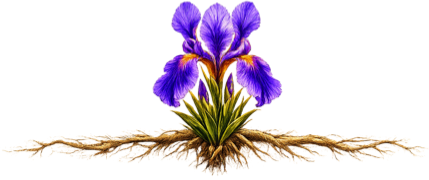
Iris Giganticaerulea is the centerpiece of White Iris Parkette, created to explore one of life’s biggest journeys: moving abroad and building a life somewhere new. It is a space for transformation, adaptation, discovery, identity, belonging, and the quiet question many people carry when life changes around them: how do I grow somewhere new without losing who I am?
Building a Life in a New Place
Moving abroad is more than changing location. It can mean leaving behind familiar streets, routines, language, friends, family, school systems, traditions, seasons, and the small everyday details that once made life feel predictable. It can also mean stepping toward opportunity, safety, education, work, adventure, independence, or a new beginning.
For some people, moving abroad is a choice filled with excitement. For others, it may happen because of family decisions, conflict, instability, work, study, or circumstances beyond their control. Some journeys are carefully planned. Others happen quickly. Some feel hopeful from the beginning. Others take time to understand.
Iris Giganticaerulea exists to hold all of those experiences with care. It does not assume every journey feels the same. Instead, it offers a place to reflect on what it means to adapt, grow, and discover yourself while building a life in a new country, culture, language, or community.
Beginning again can be both beautiful and difficult. You may feel proud of your courage one day and overwhelmed the next. You may feel grateful for new opportunities while still missing the life you left behind. Those mixed emotions are not a weakness. They are part of being human during a major life transition.
Transformation
Moving abroad can change how you see yourself, your future, your relationships, your values, and the world around you.
Adaptation
A new country often asks you to learn new routines, new expectations, new systems, and sometimes a new language.
Discovery
Starting over can help you discover strengths, interests, courage, and parts of yourself you may not have known were there.
Why People Move Abroad
People move abroad for many different reasons. Some leave home to study at a university or school in another country. Some relocate for work, career opportunities, family responsibilities, or relationships. Some move because their parents, guardians, or partners are relocating. Others are forced to leave because home is no longer safe.
There are also people who move because they are searching for something they cannot fully name yet: a fresh start, a wider world, a different future, a safer place, or the chance to become more independent. No two stories are exactly the same, and no one else can decide what your journey should mean to you.
What many of these journeys share is the experience of standing between what is familiar and what is unknown. That space can feel exciting, confusing, lonely, hopeful, overwhelming, and empowering — sometimes all at once.
Iris Giganticaerulea honours the complexity of that in-between space. It recognises that moving abroad is not simply a practical event. It can affect identity, belonging, confidence, relationships, language, independence, and the way a person understands home.
Leaving What Is Familiar
Even when moving is a positive choice, leaving familiar places and people can be emotional. It is normal to miss routines, languages, foods, friendships, seasons, and small details that once felt ordinary.
Entering What Is Unknown
A new country can bring discovery, independence, and opportunity, but it can also require patience. Confidence often grows slowly, through small steps repeated over time.
What Changes When You Move
Moving abroad can change more than your address. It may change the way you communicate, the way you solve problems, the way you introduce yourself, the way you understand culture, and the way you think about home.
You may need to learn how to ask for help in unfamiliar systems. You may need to understand different school expectations, workplace habits, social rules, transport systems, healthcare systems, or ways of making friends. Ordinary tasks can suddenly require more energy because they happen in an unfamiliar environment.
You may feel confident one day and completely uncertain the next. You may feel independent in one situation and lost in another. These changes do not mean you are failing. They are part of adaptation. Growth often feels uncomfortable before it feels natural.
Over time, small victories begin to matter. Finding your way somewhere alone, understanding a conversation, making a new friend, solving a problem, learning a local custom, or creating a new routine can become powerful signs that you are adapting.
Home Changes Too
One of the most surprising parts of living somewhere new is realizing that home does not pause while you are away. Friends continue growing. Families change. Communities shift. Streets, schools, routines, and relationships may not stay exactly as you remember them.
Many people imagine that returning home will feel like stepping back into the life they left behind. Sometimes it does feel familiar. Other times, it can feel strange. The place you remember may have changed, and you may have changed too.
This can be difficult to understand at first, but it can also be part of growing. Home can remain important even when it is not exactly the same. Your roots can still matter even as your life begins to grow in new directions.
Some people discover that home becomes less about one location and more about memory, relationships, language, culture, and the parts of themselves they carry wherever they go.
“You can grow somewhere new without losing where you started.”
Carrying Your Roots With You
The roots of Iris Giganticaerulea are part of its meaning. Moving abroad can feel like being uprooted, but people are not plants in a single patch of soil. We carry memory, culture, language, values, family stories, friendships, lessons, and identity with us.
Adapting to a new country does not require erasing where you came from. You can learn new customs while still honouring old ones. You can speak a new language while still loving your first language. You can build a new life while still carrying the people and places that shaped you.
Growth does not always mean replacing one life with another. Sometimes it means allowing both to become part of who you are. A person can belong to more than one place, care about more than one culture, and feel connected to more than one version of home.
Carrying your roots with you can become a source of strength. The experiences that shaped you do not disappear when your surroundings change. They travel with you, helping you understand yourself while you learn how to live somewhere new.
Identity
Exploring who you are when familiar surroundings change and you must define yourself in new ways.
Belonging
Understanding that belonging can grow slowly, through connection, patience, courage, and shared experience.
New Beginnings
Recognizing that starting over can be difficult, but it can also open doors to strength, confidence, and possibility.
Continue the Journey
Iris Giganticaerulea begins with the experience of moving abroad, but its deeper purpose is helping people navigate life’s biggest transitions with resilience, curiosity, and hope. Moving to a new country can test your confidence, patience, identity, and sense of belonging, but it can also reveal courage you did not know you had.
Explore Moving Abroad to reflect on relocation, culture shock, starting over, homesickness, independence, adaptation, and the process of building a life somewhere new while remaining connected to who you are.